JPEG
JPEG stands for Joint Photographic Experts Group. .jpg and .jpeg extensions are used to store images in this format. It uses a lossy compression algorithm, which means some of the image data is lost during compression.
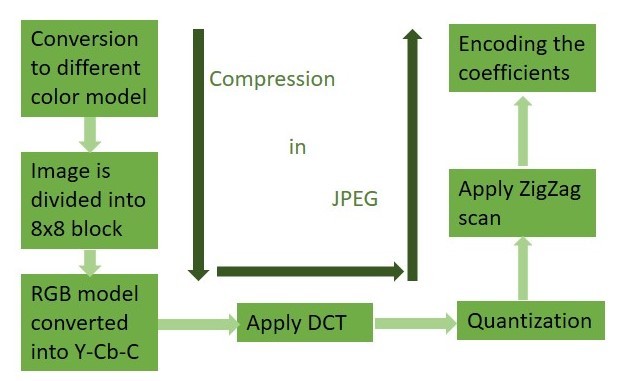
Advantages of JPEG
- Small file size: JPEG images can be compressed to small file sizes, ideal for sharing over the internet or storing on limited storage devices.
- Widely supported: Most devices and software can read and display JPEG images.
- High-quality output: JPEG compression allows high-quality output images, even after compression.
- Adjustable compression level: Compression level can be adjusted to balance file size and image quality.
Disadvantages of JPEG
- Lossy compression: Some data is lost during compression, reducing image quality.
- Limited editing: Repeated editing can further degrade quality.
- Not ideal for text or graphics: Text, graphics, or images with sharp edges can become blurry or pixelated.
MPEG
MPEG stands for Moving Picture Experts Group. It is a standard used for compressing digital video files. Like JPEG, MPEG is lossy, but it is optimized for moving images rather than still images.
Advantages of MPEG
- Small file size: MPEG compression significantly reduces video size, making it easier to store and share.
- High-quality output: Compression can produce high-quality video even after compression.
- Adjustable compression level: Users can balance file size and video quality.
- Supports various resolutions: MPEG supports resolutions from standard definition to high definition.
Disadvantages of MPEG
- Lossy compression: Some data is lost, reducing video quality.
- Limited editing: Repeated editing can further degrade video quality.
- Complex compression: Requires significant computing power.
- Limited support: Some devices may not support certain MPEG formats, causing playback issues.
Similarities between JPEG and MPEG
- Lossy Compression: Both JPEG and MPEG use lossy compression techniques, which means that they discard some information to reduce file size. This results in a reduction in image and video quality compared to the original content..
- Popular Formats: Both JPEG and MPEG are popular formats used for digital content. JPEG is commonly used for still images, while MPEG is used for video and audio.
- Adjustable Compression: Both formats offer adjustable compression levels, allowing users to choose between smaller file sizes or higher image and video quality.
- Widely Supported: Both formats are widely supported by devices and software, making them accessible and easy to use for a variety of purposes.
- Standards-based: Both formats are based on industry standards, which ensures interoperability and compatibility with different devices and software applications.
JPEG vs MPEG
| JPEG | MPEG |
|---|---|
| Stands for Joint Photographic Experts Group | Stands for Moving Picture Experts Group |
| Primarily used for web images, digital cameras, and still images | Primarily used for movies, TV shows, and web video clips |
| Mainly for image compression | Various standards for audio and video compression |
| Compression ratio typically 10:1 | Compression ratio varies, often 20:1 or higher depending on content |
| Compressed as a single file | Compressed as a series of frames using inter-frame compression |
File extensions: .jpg, .jpeg | File extensions: .mp3, .mp4 |
✍️ Written By

Mihir Panchal
Author • Researcher • Engineer